India’s economic trajectory reflects consistent job creation across its sectors, reinforcing its position as one of the world’s fastest-growing economies. India’s growth trajectory is rooted in its ability to solve the issues of unemployment and other macroeconomic fundamentals. Aligning its workforce with industry needs is a critical pillar for sustainable and inclusive economic progress. As such, industry, both private and public, have a major role to play in workforce development, job creation, and equitable development.
Understanding Rural Unemployment
According to the Period Labor Force Survey (PLFS), conducted by the National Statistical Office (NSO), Ministry of Statistics and Programme Implementation (MoSPI), Government of India the unemployment rate for persons aged 15 years and above declined to 4.7% in November 2025 compared to 5.2% in the previous month.
Rural Female LFPR (Labour Force Participation Rate) also continued an upward trend, increasing from 35.2% in June 2025 to 39.7% in November 2025. Rural Female LFPR (Labour Force Participation Rate) saw a rise from 36.9% in October 2025 to 38.4% in November 2025.
Notably, the overall trend suggests strengthening labour market conditions, supported by gains in rural employment, rising female participation and gradual recovery in urban labour demand.
Employment: A Driving Force in India
According to World Economic Forum’s Future of Job Report 2025, India is among the few countries that will supply nearly two-thirds of new workforce entrants in the coming year. It outlines how India’s increased digital access and climate mitigation efforts will shape the future of jobs in India by 2030. Employers in India are not only outpacing global adoption in technologies, but also addressing talent needs, adopting skills-based hiring, and tapping into diverse talent pools.
As per the Ministry of Labour and Employment, India has seen a net addition of 16.83 million jobs over six years, reflecting the government’s focus on youth-centric policies and its Viksit Bharat mission.
Role of MSMEs in Tackling Rural Unemployment
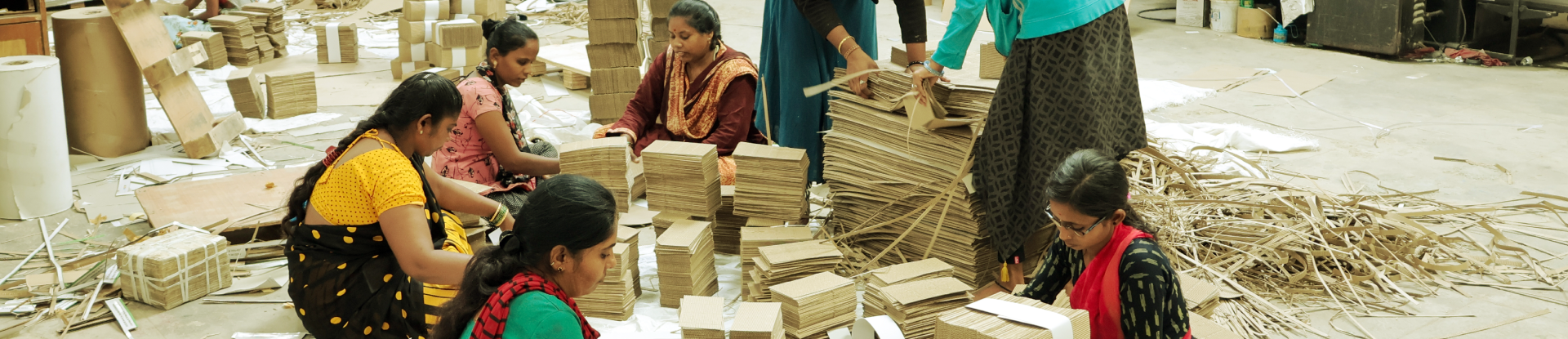
With more than 50% of India’s MSMEs located in rural areas, it is an engine for job-creation and rural development. Rural MSMEs are mostly concentrated in handicraft, textile processing, and Agri-processing. Interestingly, 20-25% of these MSMEs are run by women entrepreneurs, allowing for women’s economic participation and social empowerment. Self-Help Groups (SHGs) have also emerged as important enablers by supporting women through collective entrepreneurship, improved access to institutional credit, and livelihood opportunities.
The rich human capital residing in rural areas have been well-utilized by cottage industries and micro-enterprises working on the theme of traditional handicrafts. The major work for this has been done under the aegis of Khadi and Village Industries Commission (KVIC). KVIC has been identified as one of the key organizations in the MSME sector that has worked towards providing employment opportunities in rural areas. Under the Gram Udyog Vikas Yojana scheme, KVIC has doubled its budget of Rs 25.65 crore in the financial year 2021-22 by 134 percent to Rs. 60 crore in the financial year 2025-26 to ensure maximum people are provided employment in these areas.
Supporting government schemes such as MUDRA (Micro Units Development and Refinance Agency) has helped entrepreneurs from rural areas set their own enterprises and generate rural employment. Targeted initiatives like the Coir Udyami Yojana, designed specifically for MSMEs in the coir sector, provide subsidies for setting up units in rural areas, thereby integrating traditional workers and unemployed youth into formal economic activity.
Schemes such as SFURTI (Scheme of Fund for Regeneration of Traditional Industries), aims to boost traditional enterprises with infrastructure support, skill development, and market linkages. With better access to the market, these rural- based industries contribute to employment generation and underemployment.
Way Forward
Today, Gross Domestic Product (GDP) alone cannot fully capture a country’s development. It is important to look at multiple macroeconomic indicators such as employment. Employment carries both economic and social weight as higher job level signals a stronger economy, stimulates consumption, and fuels sustained growth.
The MSME sector accounts for 30% of India’s GDP, 35.4% of manufacturing, and 45.73% of exports in the country. This makes the sector a critical player in improving and tackling the overall issue of unemployment. With its growing capacity to offer jobs and sustain livelihoods of rural youth and families, they are the forerunners of economic growth, innovation, and Atmanirbhar Bharat.