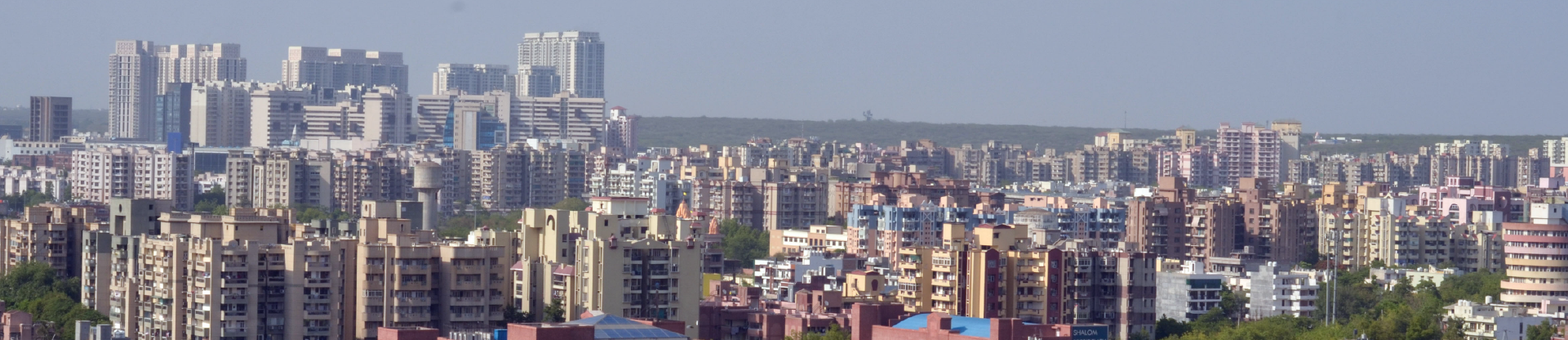
India’s commercial real estate (CRE) sector has emerged as a key driver of the nation’s economic growth, shaped by urbanization, technological adoption, demographic shifts, and progressive reforms. It is not just a major employer, but a magnifier of capital and foundational infrastructure that enables every other industry to thrive. The CRE segment, encompassing office, retail hubs, data centres, and logistics space within rapidly growing cities, acts primarily as a multiplier of this economic engine.
A report by CII titled “Commercial Real Estate Potential is Built Opportunity is Now” highlights the changing narratives that are slowly emerging from India’s CRE sector. The most prominent of these: India’s office segment is mature and globally competitive, retail is resilient and redefined, and Tier 2 and Tier 3 cities are increasingly dominating CRE growth.
India’s Office Market: A Global Contender
India’s office market evolution from 1990 to 2025 stands as the most compelling transformation in global commercial real estate. Driven by early tech adoption, post-pandemic era, and themes of innovation and policy-led growth, India today is the fourth largest office market globally and has achieved a defining milestone by crossing the one billion square feet threshold in total office stock.
This accomplishment not only reflects scale but institutional maturity, structural stability, and sustained growth momentum. The office stock is currently valued at approximately ₹16.4 trillion or USD $186 billion, demonstrating the sector’s depth and resilience. Key office areas in India include Mangaluru, NCR region, Mumbai Metropolitan Region, Hyderabad, Pune, Chennai, and Kolkata.
India’s office market is also undergoing structural transformation due to a wave of SEZ denotifications. The gradual removal of SEZ areas has helped rebalance the landscape, expand occupier access and unblock previously constrained supply. It has also created immediate elasticity in markets where new supply pipelines have lagged demand.
The Macroeconomic Backbone Powering Growth
India’s economic engine continues to power ahead with notable robust GDP growth of 6.5% in FY2025 and an expected growth of 6.6% in FY2026 as per IMF estimates. As inflation moderates with CPI averaging 5.4% in FY2025 and infrastructure investment deepens with more than INR 11.2 trillion in FY2025, the country’s macroeconomic fundamentals are anchored for long-term stability.
Within this momentum, the retail sector stands out as not just a barometer of consumption, but as the structural pillar for India’s urban growth story.
Growth of Tier 2 and Tier 3 Cities
Beyond the metros, smaller cities have also emerged as vibrant retail markets, fuelled by aspirational consumers and surging discretionary spending. The physical retail ecosystem is undergoing a transformation, moving from unorganized, fragmented formats to modern, experience-led environments. Tier 2 and Tier 3 cities are now witnessing the rise of Grade A shopping centres, revitalized high streets, and curated retail precincts that mirror the evolving tastes of their population.
This shift is not cyclical, but structural, reflecting a deeper integration of organized retail into everyday urban life.
Key Growth Catalysts Powering India’s Real Estate Momentum
- Rising urban affluence and consumer sophistication
The expanding urban middle class, buoyed by rising disposable incomes and evolving consumption preferences, is redefining the country’s retail landscape. Notably, Tier 2 cities are not just passive consumption markets, but actively shaping retail demand.
Retailers today are increasingly adopting a multi-format strategy to meet consumers wherever they are, with destination shopping centres, daily use high streets, or high footfall transition hubs such as airports. This offering to consumers is notable as it is changing how the larger Indian population shops and also approaches the retail spaces.
- Institutionalization and capital deepening
The clear institutionalization of capital has led to maturation of India’s retail real estate. The listing of Nexus Select Trust, the country’s first retail REIT, signals strong investor confidence in income-gathering retail assets. This institutional push is expected to continue as India eyes the ambition of a $5 trillion economy, while also enhancing transparency, governance, and yield focus in the sector.
- Policy gains and infrastructure enablement
Government-led initiatives such as the National Retail Policy and infrastructure-led urban developments are also dismantling legacy bottlenecks. Reforms to simplify licensing, encourage mixed-use zoning, and formalizing of trade practices are laying the groundwork for a more supportive regulatory ecosystem. Investments in metro networks, ring roads and smart city corridors are expanding retail catchment areas, enabling shopping centres and high streets to tap into a wider consumer base with enhanced accessibility and footfall resilience.
The Opportunity is Now
Infrastructure is the backbone of India’s economy and social development, shaping opportunities for industry, employment, and improved quality of life. And with Tier 2 and Tier 3 cities taking the lead, India’s CRE landscape is already undergoing transformation. Backed by strong macroeconomic fundamentals, progressive policy reforms, and growing institutional capital, India’s CRE sector is entering a new chapter, and the opportunity to leverage it is now.