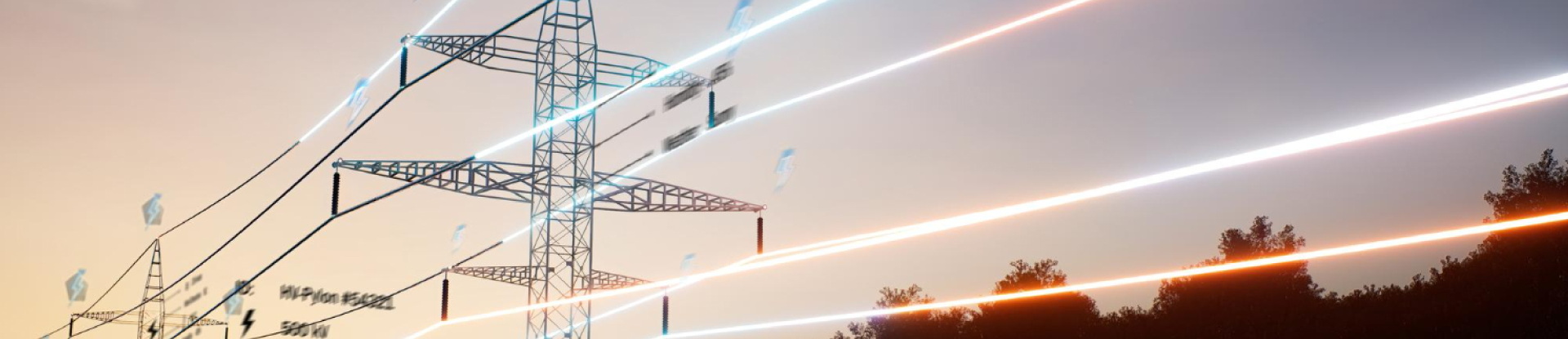
As the systems in India advances, the focus is on ensuring reliable, affordable, cleaner, and more secure energy for every household and enterprise. And the progress is already visible. Average electricity availability in rural India has increased from 12.5 hours in 2014 to 22.6 hours, while urban areas now enjoy up to 23.4 hours of power supply, up from 22.1 hours in 2014.
India is now among the world’s top three energy consumers and demand continues to grow every year. Building a resilient energy ecosystem in India is not patching the old system, but embracing new revolution, so that the country can power growth, improve livelihoods and move towards its long-term commitment of achieving net zero emissions by 2070.
One Nation, One Frequency
In the past decade, India has added significant generation and transmission capacity, bringing national energy shortages down to 0.3% in FY2025-26. Total electricity generation 1,739.09 Billion Units (BU) in 2023-24 to 1,829.69 BU in 2024-25.
While at net capacity, we can generate 520 GW of electricity, the real test is the ability to manage peak loads without operational loss. The current load dispatch centers can successfully manage these peak demands with zero energy loss due to the world’s largest synchronous grid with 120 GW interregional transfer capacity, integrating the country into one nation, one grid, one frequency.
Scaling Renewable Energy
India’s energy expansion represents a policy-driven transformation that combines scale, speed, manufacturing depth, and global engagement. India today ranks fourth globally in total installed renewable energy capacity with solar energy capacity at 140 GW in January 2026. Wind energy also plays a substantial role with the cumulative installed wind capacity of 54.65 gigawatts by January 2026.
This scale across household, agriculture, infrastructure and manufacturing for renewable energy has been possible through government programs such as PM Surya Ghar, Pradhan Mantri Kisan Urja Suraksha Evam Utthaan Mahabhiyan (PM- KUSUM), dedicated solar parks, and production-linked incentive (PLI) schemes.
India has also achieved a landmark in its energy transition journey by crossing 50% of its installed electricity capacity from non-fossil fuel sources last year, more than five years ahead of the target set under its nationally determined contributions to the Paris Agreement. The share of non-fossil fuel today in India’s energy capacity is fuelled by 51.93% of non-fossil fuel-based capacity and the rest by fossil fuels.
is about building the new, is about building and is embracing the new revolution, so that the country can power growth, improve livelihoods, and move towards its long-term commitments of achieving net zero emissions by 2070. Scaling renewable energy, Policy-level reforms and structural changes are aimed to improve power availability as a key outcome. These improvements reflect significant progress in the reliability and reach of electricity service across the country. India recently announced its nationally determined contributions for 2031-35 guided by the vision of Atmanirbhar Bharat. India has committed to reduce emissions intensity of GDP by 27% by 2035 from the 2005 level. It also plans to create a carbon sink of 3.5 to 4 billion tons of CO2 equivalent through forest and tree cover by 2035 from 2005 level.
As India positions itself as a global manufacturing hub, a bulwark in digital economy, and a responsible clean energy leader, the power sector has become the natural bedrock of our national competitiveness.
Together, both of these energy capacities are instrumental in driving India forward and envision the $5 trillion economy benchmark. Green hydrogen has emerged as a key pillar of India’s clean energy transition, particularly for sectors where reducing emission is difficult, such as steel, fertilizers, refining, shipping, and heavy transport. India’s target of producing 5 million metric tons of green hydrogen annually by 2030 under the Green National Hydrogen Mission is expected to attract over Rs 8 lakh crore in investments and reduce fossil fuel imports by more than Rs 1 lakh crore. Today, energy efficiency is not only about producing clean energy, but also about using energy wisely. The producing energy while consuming. India has strengthened its efficiency framework through policy reform and market-based mechanisms over the years, such as the transition from Perform, Achieve, and Trade (PAT) scheme to the carbon credit trading system. At the household level, energy efficiency is also being implemented to promote the adoption of energy-efficient appliances and lighting. The Ujala program has distributed more than 36.87 crore LED bulbs, resulting in 38.8 million tons of CO2 reduction per year. India Energy Stack, IES, is a digital public infrastructure designed to enable digital interactions across utilities, consumer regulators, and distributed energy assets. Conceived to address fragmented data systems and costly integration, IES is critical to India’s energy needs. It will not only provide a common digital rail based on consent-based data sharing, but create an ecosystem that is interoperable, competitive, and capable of converting participation into economic value. IES aims to transform active energy participation by enabling meaningful customer consumer choice, monetization of rooftop solar, batteries, EV charges, flexible loads at scale. It strengthens transparency, reduces disputes, and enhances rich coordination. As India aims to achieve global leadership, its tech stack for energy has to be robust, evolving, and highly efficient. With IES, the energy agency… can be strengthened, giving consumers the ability to choose and earn from the energy transition at scale.
India’s energy journey is no longer defined by a single source. It draws strength from solar parks, rooftop panels, hydrogen pilots, modernized nuclear frameworks, smart meters, digital platforms, and transition from current non-renewable sources to renewable sources. As India moves towards its 2070 commitment, the evolving spectrum of energy solutions show that growth and sustainability can move together. The power that supports homes, farms, factories, and data centers will come from a system designed to be resilient, inclusive, and prepared for future needs. India today is not just generating power, it is redesigning how power is produced, delivered, and shared for a sustainable and self-reliant future. At the stage India is in, it cannot afford an energy collapse from a digital infrastructure to a health road and achievement of sustainable development goals to achievement of something else as well. Everything relies on energy. India’s data centre capacity has grown significantly, increasing from about 375 MW in 2020 to around 1500 MW by 2025. With the rapid expansion of AI and digital infrastructure, electricity demand from data centres is projected to reach 13.56 GW by 2031-32 as per government estimates. Meeting this massive continuous power demand from AI, R&D, and other technology-driven systems is sustainably our next milestone. Nuclear energy is also a decisive part of India’s plan to create low-carbon and reliable power. The target of 100 GW of nuclear capacity by 2047 and the Sustainable Harnessing and Advancement of Nuclear Energy for Transforming India Act 2025 affirm our technological sovereignty and create the legal and policy framework for private sector participation. Overall, what India needs now is global partnership in technology, financing, and supply chains. Being a leader in the global South, India needs to work in coordination with countries, government, industry leaders, innovators, and global partners and help co-create a new energy architecture that is clean, reliable, digitally integrated, and globally interconnected. India must champion cross-border electricity collaboration and invest boldly in next-generation transmission, digital grid intelligence, and work-aligned market mechanisms, and accelerate deployment of renewable hydrogen innovation, hydropower innovation, flexible gas assets, and clean energy for the digital economy. With the current geopolitical situations, one thing is very clear that India cannot rely alone on external energy needs.
India’s participation in platforms such as Global Biofuels Alliance and the G20 Energy Transition Working Group also reflects its emphasis on practical and inclusive approaches to energy transition. These engagements provide opportunities to exchange perspectives on biofuels, alternative fuels, and gas-based systems to help find solutions to issues related to supply diversification, affordability, and emissions reductions.