
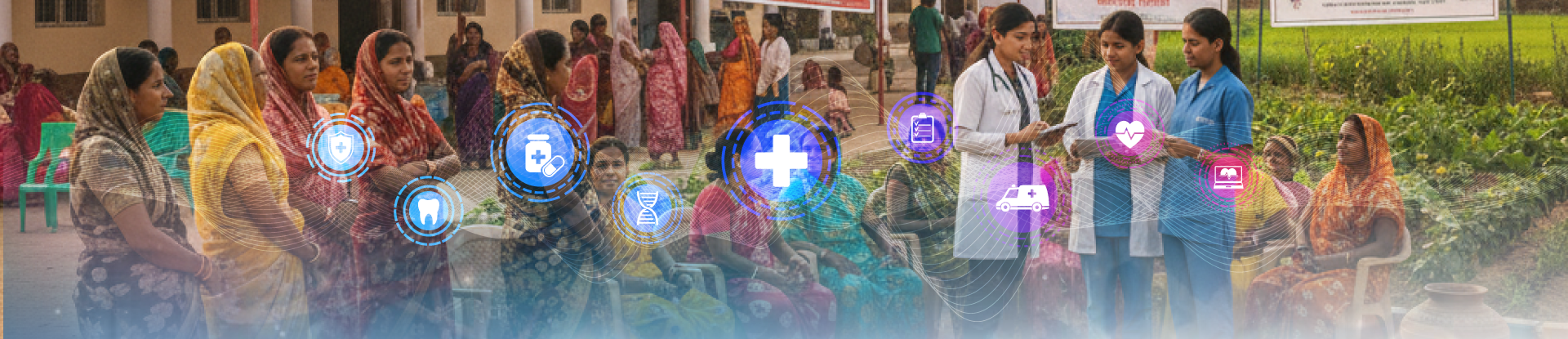
Women constitute the bedrock of India’s social and economic progress. As such, addressing their health issues is not only an ethical responsibility, but a strategic necessity for equitable development and national resilience. Over the past decade, policy measures by the government such as PM-JAY, Pradhan Mantri Matru Vandana Yojana (PMMVY), Pradhan Mantri Swasthya Suraksha Yojana (PMSSY), Janani Suraksha Yojana, and the Labour Room Quality Improvement Initiative (LaQshya) and most recently the Swasth Nari, Sashakt Parivar Abhiyaan have systematically advanced the provision of respectful, accessible, affordable, and high-quality care for women across all life stages. While these advancements reflect India’s commitment to public health, many women still face persistent and unique challenges such as social stigma, limited economic agency, and mobility barriers that affect their access to and experience of healthcare.
To address these disparities, Confederation of Indian Industry (CII), along with the Women’s Collective Forum (WCF) and Indian School of Business (ISB) has released a report titled “New Ideas & Innovations for Women’s Health in India” The strategies are mapped to the five As: awareness, accessibility, affordability, acceptance and accountability.
Key Actionables and Recommendations
The report highlights the urgent need for a digital overhaul so that digital health solutions can be built around women’s needs. It also emphasizes co-designing initiatives with frontline workers to ensure that the tools are practical and trusted. Stronger coordination between the Centre and States is also needed for seamless health data integration. It is important that innovations such as AI and other digital tools are incorporated for diagnostics, monitoring, and service delivery. For this, everyday realities, such as access to mobile phones and digital literacy, must shape system design. The private sector is increasingly central to advancing women’s health in India, and aligning its agility with national health priorities should be a priority. Collaborative ecosystems are essential to scale women-centered health solutions sustainably.
While India has nurtured numerous innovative health solutions, the scale of these solutions remains constrained without national-level standardization and sustained policy integration. Hence, large-scale adoption must be guided through evidence, adaptability and inclusivity.
Furthermore, standardized health data is essential to ensure interoperability, robust analysis, and effective decision-making. The report recommends the need for systemic reforms to address inequality in pay, leadership, and career progression for women in health, gender-neutral workplace policies, which are the need of the hour as they can unlock women’s leadership potential and transform retention in the health workforce.
IDEAS-based Approach for Inclusive Digital Health Solutions
The report suggests an IDEAS-based approach to ensure that digital health solutions in India are inclusive, gender-responsive, and sustainable.
Innovation emphasizes co-created gender-responsive technologies that bridge existing gaps in diagnostics, treatment, and service delivery.
Digitization drives efficiency across the care continuum, enhancing system interoperability.
Anchored in Equity, the approach ensures that all women, irrespective of their background, geography, or caste, can access quality care and health innovations.
Accessibility calls for removing systemic and structural barriers to better infrastructure, public-private partnerships, and capacity building of frontline workers.
Security underscores the importance of robust data protection, user privacy, and ethical governance to build trust and ensure safe utilization of digital health tools.
Bridging gender gaps through standardized knowledge and genotype research is key to designing interventions that are evidence-based and context-sensitive. Equally, AI and emerging technologies should be created with flexibility in mind, ensuring that algorithms reflect real-world diversity and avoid perpetuating bias.
The Need for Change
Women’s health is India’s next frontier for inclusive growth. Progress in both maternal and reproductive health has been significant, but as challenges grow, the momentum must be sustained to achieve India’s public health goals and Sustainable Development Goals (SDGs). Transitioning towards a tech-enabled, prevention-first public health system requires that women’s health outcomes receive equitable attention and are addressed through tailored, data-driven, and contextually relevant solutions. By integrating new technologies and inclusive policy, India can traverse the path towards equitable, dignified, and sustainable health outcomes for all women.
Latest Post
Considerable benefits using 1win for mobile gaming and casino experiences
Considerable benefits using 1win for mobile gaming and casino experiences...
Read MorePolitical events forecasting with kalshi offers unique insights into future outcomes
Political events forecasting with kalshi offers unique insights into future...
Read More