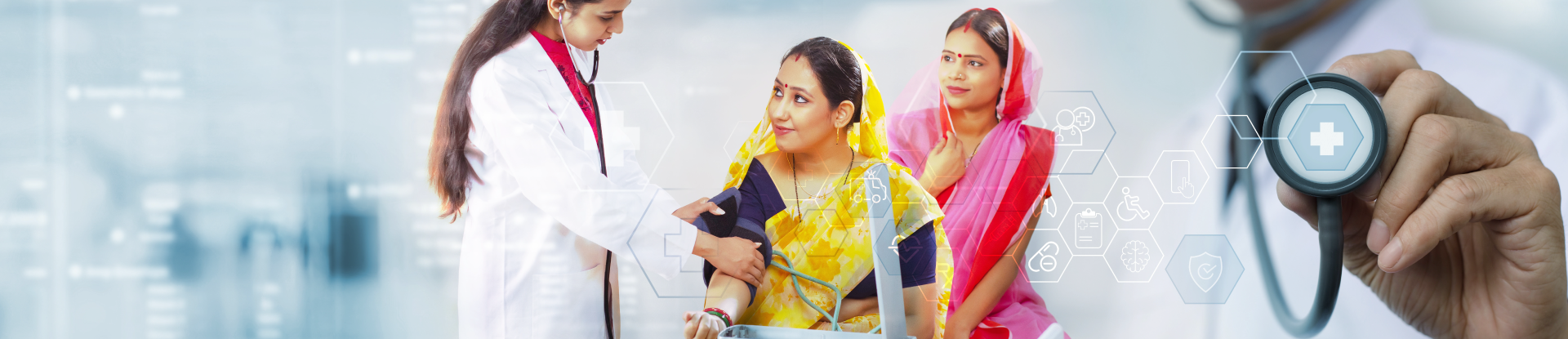
Building Gender Equity Through Equitable Healthcare
The past decade has been instrumental for India’s healthcare system as it has undergone a profound transformation with a shift to people-first approach. The government has focused on making quality healthcare accessible and affordable to all citizens, especially women, the underprivileged and rural population.
As women often carry the highest burden of unpaid care work, limited mobility, and low financial agency, access to healthcare is not only essential for better health outcomes, but also a direct lever for gender equality in healthcare.
An Important Component of SDGs
Gender equitable healthcare is fundamental to achieving the Sustainable Development Goals (SDGs) that have been adopted by India and other countries as a part of the United Nations 2030 Agenda. SDG 3 aims to ensure healthy lives and promote well-being for all at all ages and has specific targets addressing maternal mortality, reproductive health, and universal health coverage. Similarly, SDG 5 aims to achieve gender equality and emphasizes the need to ensure women’s full and effective participation and equal opportunities. It is very well understood that SDG 3 and SDG 5 go hand in hand because without addressing healthcare disparities, achieving gender equity is difficult.
The intersection of these goals is the most evident in maternal and reproductive health, both of which are areas in which India has made significant strides.
Saving Mothers, Building Futures
Maternal mortality is a critical public health issue as it is a key indicator of healthcare quality and accessibility, reflecting the effectiveness of overall maternal health services. Addressing maternal mortality is essential for ensuring the well-being of women and newborns to achieve global health goals.
Over the years, maternal mortality trends in India have shown a steady decline, while some of the states have successfully reduced their MMR to levels below the SDG target of 70 per 100,000 live births. This has been possible through the National Health Mission, which focuses on the Reproductive Reproductive, Maternal, Newborn, Child, Adolescent Health, and Nutrition (RMNCAH+N) strategy, encompassing multiple programs to improve maternal health outcomes such as Janani Suraksha Yojana (JSY), Pradhan Mantri Matru Vandana Yojana (PMMVY), Janani Shishu Suraksha Karyakaram (JSSK), Surakshit Matritva Aashwasan (SUMAN) and many more.
These programs have been instrumental in ensuring equitable access to women from weak socio-economic status by promoting institutional delivery, maternity benefits, free transport, diagnostics, medicines, and zero tolerance for denial of services.
Ayushman Bharat, the largest health insurance scheme in the world, also offers to increase women’s health through the provisions of Health and Wellness Centres (AB-HWCs) that offer universal free, primary health care, and the Pradhan Mantri Jan Arogya Yojana (PMJAY), providing secondary and tertiary hospital care to the vulnerable, with specific design strategies to reduce gender discrimination in health care.
Population-based screening, prevention and management, including treatment and referral for common non-communicable diseases such as diabetes, cervical and breast cancer through functional AB-HWCs are aimed to improve access for both men and women.
Maternal and child health have also seen significant strides due to the efforts of Universal Immunization Program (UIP), one of the world’s largest and most ambitious public health initiatives. Every year, UIP targets 2.6 crore newborns and 2.9 crore pregnant women, ensuring that every child is freely immunized in their first year of life.
These efforts have shown results, with India’s Full Immunization Coverage (FIC) reaching an impressive 94.1%, reflecting the government’s strong commitment to preventive health care.
Institutional Support for Equitable Health Access
The Confederation of Indian Industries’ Centre for Women Leadership, along with the Ministry for Women and Child Development and Bill and Melinda Gates Foundation have launched the Alliance for Global Good: Gender Equity and Equality. It is a global collective of government, industry, and development organisations that work towards inspiring intentional action to enable women across the globe to achieve their economic potential. It aims to bring together stakeholders who can design and drive campaigns that change perspectives and narratives that are gender unequal and pose a cultural challenge for women to participate fully. Signatories to the Alliance will push for actions that achieve enhanced equality, access to health facilities, educational opportunities, and economic opportunities for women.
While we aim to achieve Universal Health Coverage, it is essential that we also address social and environmental detriments to women’s health. Large-scale efforts such as Beti Bachao Beti Padhao, Ujjwala Yojana, and the Swachh Bharat Mission play a significant role in responding to such determinants and building gender equity in healthcare.