
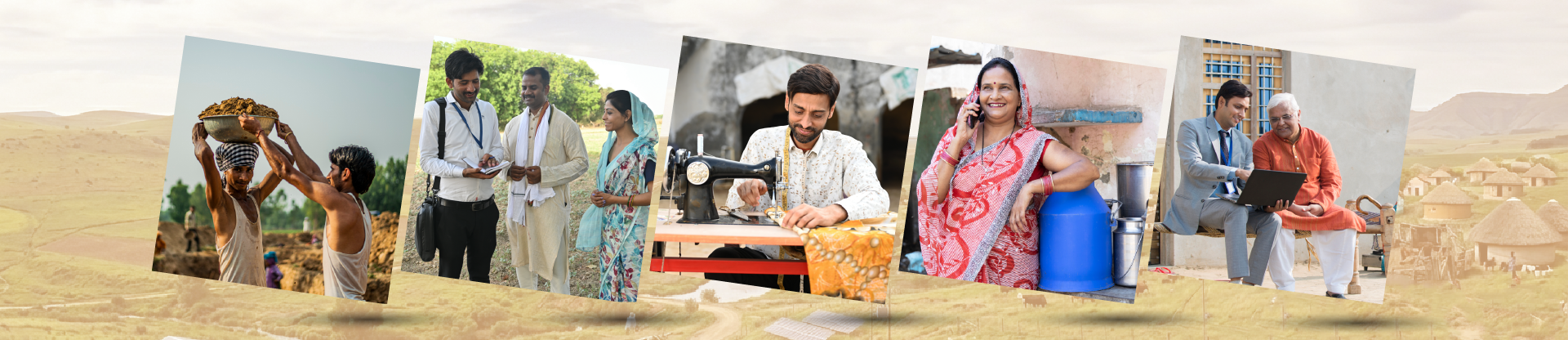
India’s aspiration for inclusive and sustainable growth rests firmly on the vitality of its villages. Nearly two-thirds of India’s population still lives in rural areas, and the resilience of rural economies has a direct bearing on national prosperity. The path towards a developed nation needs collaborative partnerships between the government, industry, civil society and village communities to strengthen rural economies rooted in shared value creation. These efforts should complement national priorities, align with the UN Sustainable Development Goals (SDGs) for 2030, and support India’s vision of becoming a developed nation by 2047.
At the heart of India’s rural transformation are large-scale government programmes that provide a strong foundation for economic security and opportunity. Flagship rural employment guarantee schemes such as Mahatma Gandhi National Rural Employment Guarantee Act (MGNREGA) and the Deendayal Antyodaya Yojana-National Rural Livelihoods Mission (DAY-NRLM) have created safety nets while enabling long-term livelihoods. As of 2025-26, MGNREGA and its successor G-RAM-G has generated over 190 crore person-days of employment in a single year, benefiting nearly five crore rural households and creating close to ten crore durable assets such as ponds, roads and water-harvesting structures.
Cross-Sectoral Convergence
Rural challenges increasingly demand solutions that crosscut across sectors.
For instance, livelihood programmes are being strengthened through market access and technology. An example is the Government’s National Rural Livelihood Mission that has mobilised over 10 crore rural households into more than 9 million self-help groups, with a special focus on women’s empowerment, village entrepreneurship and financial inclusion. The Drone Didi initiative has blended technology with women’s empowerment by training rural women to operate agricultural drones and improving farming efficiency.
Health interventions are increasingly linked with nutrition, sanitation, and leveraging digital technology. Climate resilience is being addressed alongside income stability, innovation and governance capacity, showing that convergence is essential for long-term sustainability.
Sustained rural development is anchored in continuity, institution strength, and community ownership. Hence, there is a need to encourage stakeholders to deliver programs that are built to integrate with local systems instead of operating as standalone efforts.
The Need for Multi-Stakeholder Collaboration
This growing emphasis on structured interventions that are cross cutting, outcome-oriented, and scalable, reflect the urgent need to ground multi-actor efforts in coordinated action for durable impact.
CII’s work consciously complements these national programmes by bringing in industry expertise, technology and market linkages. Through policy advocacy and on-ground engagement, CII has consistently underscored the importance of rural infrastructure, water conservation, smart irrigation, skilling and non-farm employment as drivers of inclusive growth. Industry participation in rural supply chains, food processing, storage and agri-logistics directly strengthens outcomes envisioned under schemes such as PM Gram Sadak Yojana, PM Awas Yojana-Gramin and Mission Antyodaya, which emphasise convergence at the village level.
A defining feature of CII’s approach has been collaboration. Since commencement in 2011, The CII Foundation has exemplified this ethos by partnering with government ministries and departments, corporates, academic institutions, NGOs and community-based organisations to pilot scalable models of rural development.
Catalysts of Rural Transformation
Women and youth remain central to rural transformation. Programs that invest in their economic participation, leadership, and skill development are generating multiplier effects at the household and community levels. In parallel, the application of technology aligned with local context is improving access, transparency, and efficiency in service delivery.
Rural economies have seen an encouraging trend of increased alignment with CSR initiatives, government programs, and community priorities. This alignment enhances scale, reduces fragmentation, and improves accountability. It also reinforces the role of collaboration in advancing rural development objectives.
These partnerships translate policy intent into lived reality. For instance, in a village in Gumla district in Jharkhand, young women who have taken up tamarind processing under a CII Foundation-supported initiative received collective training and market access that changed her family’s prospects. Where seasonal migration was once the norm, stable village-based income has restored both dignity and confidence. Such anecdotes echo across regions where corporate social responsibility projects, aligned with government schemes, strengthen grassroots institutions and local economies.
Key Areas of Industry- Community Collaborations
Industry-Led Skilling & livelihood
India’s demographic advantage, a young and growing working-age population is its biggest asset. However, this advantage can be translated into economic growth if skilling systems are demand-driven, market-aligned, and outcome-oriented.
As of 2023-24, only 4.4% of the youth in the age cohort of 15-29 have received formal vocational technical training. Vocational education penetration and strong employer partnerships are, therefore, essential to making in-house demographic deficit a reality. CII is supporting the skilling initiative by rolling out a Recruit-Train-Deploy skilling model Pan India.
CII’s collaborative model also draws strongly on academia and technology providers to future-proof rural livelihoods. Skill development projects run through CII Skills Centres across more than 75 locations align training curricula with local industry demand, ensuring employability for rural youth, women and disadvantaged groups. Over a decade of implementation experience shows that when skilling, financial literacy and placement support converge, communities move from subsistence towards aspiration.
Beyond skilling, there is a need to focus on building sustainable rural livelihoods by leveraging local resources, community aptitude, and stronger market linkages. For example CII Foundation piloted sustainable livelihood programmes for rural women in Uttar Pradesh, Jharkhand and West Bengal, supporting activities such as beekeeping, poultry farming and tamarind processing that build on local strengths. Over 120 women in the Sundarbans, for instance, now earn supplementary incomes through poultry enterprises linked with mangrove restoration, blending ecological resilience with economic gain.
Climate Change Resilience and Sustainable Agriculture
These efforts are framed within the larger global and national sustainability agenda. India is firmly committed to achieving the SDGs by 2030 and net-zero emissions by 2070, with renewable energy, climate-resilient agriculture and circularity playing a pivotal role. By 2024-25, India’s renewable energy capacity had grown more than fivefold from a decade earlier, with non-fossil fuel sources accounting for about 45-50 per cent of installed electricity capacity, well ahead of interim targets. Schemes such as PM-KUSUM, which promotes solar-powered pumps, not only reduce emissions but also lower input costs for farmers and create decentralised energy-based livelihoods.
CII and its members are actively integrating these green transitions into rural development initiatives. Crop residue management projects in Punjab and Haryana, have been implemented by the CII Foundation in partnership with state agricultural universities and corporate partners. These projects have enabled farmers in over 1000 villages with technology and capital equipment investments that provide alternatives to stubble burning while improving soil health and air quality. Such initiatives illustrate how climate action and rural income security can advance together when stakeholders work in unison.
Financial Inclusion
Unorganized sector workers constitute over 90% of India’s workforce. This vast majority faces systemic exclusion from formal skill systems, financial services, and social protection mechanisms.
Through collaborative partnerships, the employability and income security of migrants and unorganized sector workers can be enhanced by
- Improving their financial literacy and access to formal financial services
- Strengthening awareness and enrollment in social protection and social security schemes
- Facilitating access to banking, insurance, pensions, and microloans through targeted awareness campaigns, counseling sessions, and registration drives.
There is also a need to link migrant workers to portable social security benefits under schemes such as the e-Shram portal to ensure no worker is left behind.
Collaboration as the Cornerstone
As India looks ahead to 2047, the idea of a developed nation is inseparable from prosperous villages. When industry, communities, and government align their priorities, resources, and accountability mechanisms, the result is not just program delivery, but systemic change. Shared values between industry, government and communities create shared ownership of development outcomes. When corporates invest not just funds but capabilities, when communities co-create solutions, and when policy frameworks encourage convergence, sustainable growth takes root at the village level. CII’s experience shows that collaborative partnerships are not an optional add-on but the very backbone of resilient rural economies, capable of powering India’s journey towards inclusive, green and enduring development. Investing in rural India today is investing in a resilient growth story that the country needs for a better tomorrow.
Latest Post

Governance and the Role of Independent Directors in Family Businesses Boards
No organization excels without effective leaders. Leaders help the organization...
Read More
Towards a Globally Competitive Indian Transmission Line Industry
From the cars on the street to the lights that...
Read More
The Future of Pharma: Patient-Centric, Equity-Driven and Innovation-Led
India’s Pharma Sector: Advancing Innovation, Access and Resilience India’s pharmaceutical...
Read More
Logistics intelligence
For much of modern economic history, national competitiveness was shaped...
Read More
Tamil Nadu must now begin focusing on new growth engines
Tamil Nadu has built a strong base for its next...
Read More