
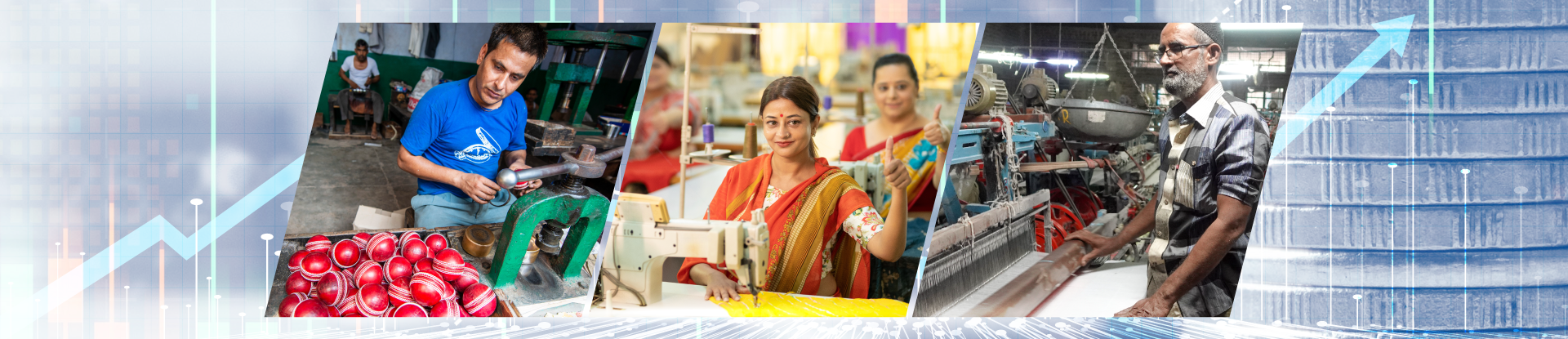
India’s Micro, Small and Medium Enterprises (MSMEs) sector has long been the backbone of the economy. From small family-run businesses and kirana stores to emerging digital-first enterprises, MSMEs have traditionally focused on survival amid economic uncertainties.
On International MSME Day 2026, the sector finds itself at a defining inflection point. Having demonstrated remarkable resilience through the pandemic, supply-chain disruptions, inflationary pressures and geopolitical challenges, MSMEs are now transitioning from survival-led enterprises to scale-ready growth engines. Supported by policy reforms, digital transformation and expanding market opportunities, they are increasingly positioned to drive India’s next phase of economic growth and global competitiveness.
The Economic Backbone of India
MSMEs are often described as the backbone of the Indian economy—and rightly so. The sector contributes nearly 30 per cent to India’s GDP, accounts for over 45 per cent of India’s exports and is among the largest generators of employment after agriculture. With more than 79 million enterprises registered on the Udyam and Udyam Assist platforms as of February 2026, India’s MSME ecosystem is undergoing rapid formalisation. Driven by digital platforms, simplified registration and government support, this expanding formal base is improving access to credit, government schemes and new market opportunities.
The financial ecosystem is responding positively to this transformation. Improved formalisation has strengthened MSMEs’ access to institutional finance. According to RBI data, outstanding bank credit to the MSME sector grew by 23.5 per cent during FY26, significantly higher than overall credit growth, making MSMEs one of the fastest-growing segments of bank lending.
Moreover, with over 74.7 million enterprises employing more than 328 million people, MSMEs remain the second-largest employer after agriculture, playing a vital role in driving inclusive growth, particularly in semi-urban and rural India.
Yet, while access to finance has improved, scaling remains a challenge.
A large proportion of MSMEs within the country continue to operate at sub-optimal levels of productivity, technology adoption and market reach. Many remain concentrated in local or regional markets and struggle to integrate into larger domestic and global value chains.
The global economic landscape is undergoing a significant transformation, driven by supply-chain diversification, the China+1 strategy, rapid digitalisation and growing sustainability requirements. These trends present a unique opportunity for MSMEs to integrate more deeply into global value chains. As multinational companies increasingly diversify their sourcing and manufacturing networks, India is emerging as an attractive alternative. To fully capitalise on this opportunity, however, MSMEs must go beyond competing on cost alone and focus on enhancing quality, innovation, productivity and scale.
Digital Transformation: A Catalyst for Scale
Digital transformation is emerging as one of the strongest enablers of MSME scaling. A 2025 study found that 53.8 percent of MSMEs have adopted at least one digital tool, with many reporting sales growths of 21–30 percent. Digitalisation is improving productivity, streamlining operations, reducing costs and enabling businesses to access wider markets. Emerging technologies such as AI, cloud computing and Digital Public Infrastructure are further enhancing competitiveness.
Policy Support: Building a Growth-Friendly Ecosystem
India’s policy framework has increasingly focused on enabling MSMEs to scale up. The Union Budget 2025–26 introduced several growth-oriented reforms, including enhanced credit guarantee cover up to Rs 100 million and new credit card facilities for micro-enterprises.
Flagship schemes such as: Pradhan Mantri Mudra Yojana (PMMY), Prime Minister’s Employment Generation Programme (PMEGP), Credit Guarantee Fund Trust for Micro and Small Enterprises (CGTMSE), PM Vishwakarma Scheme have collectively improved access to finance, encouraged entrepreneurship, and enabled capacity expansion.
Beyond technology and policy support, MSMEs must build greater resilience and sustainability. Diversifying supply chains, strengthening operational flexibility, adopting cleaner technologies and aligning with global environmental, social and governance standards will be critical to enhancing competitiveness and succeeding in global value chains.
India’s journey towards becoming a developed economy by 2047 will depend significantly on the ability of its MSMEs to scale. Having demonstrated remarkable resilience, the sector must now focus on innovation, productivity and global competitiveness. The next chapter for Indian MSMEs is no longer about survival—it is about scale.
Latest Post
Considerable benefits using 1win for mobile gaming and casino experiences
Considerable benefits using 1win for mobile gaming and casino experiences...
Read MorePolitical events forecasting with kalshi offers unique insights into future outcomes
Political events forecasting with kalshi offers unique insights into future...
Read More