

Data centers have emerged as India’s fastest-growing commercial real estate segment, backed by strong pipelines fuelled by 5G, AI, cloud adoption, and data localization mandates. India’s data center market has crossed 10 gigawatts in total capacity, of which 1.4 gigawatts is operational. This means that the live capacity could expand nearly sevenfold, supported by strong pre-leasing momentum and 8.8-gigawatt development pipeline currently planned.
The total data center capacity in the country has increased from 375 MW in 2020 to 1.4-1.5 GW by 2025. Data centers are now established across key locations of the country. India’s emergence as a preferred data center destination supported by operating costs that are nearly one-third of the global average.
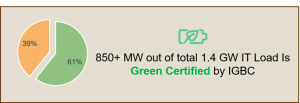
Figure 1: India’s total certified Green Data Center (2025)
The Ministry of Electronics and Information Technology (MeitY) estimates the digital economy in India to grow from USD 370 billion in FY 2022-23 to a phenomenal USD 1 trillion by FY 2029-30, highlighting the enormous scale of opportunity in the sector.
Key Drivers of Growth
India’s data center growth is driven by structural and policy level tailwinds. The digitization push, combined with rising enterprise, cloud adoption positions India as a data hub. Significant investments in fibre optic networks and submarine cable expansion have also facilitated data center efficiency revolution. The growing industry is expected to require 13.56 GW of electricity by 2031-32, reflecting the sector’s rapid expansion.
Key Challenges
- Power Constraints
Data Centers are highly energy-intensive, with hyperscale facilities requiring 20-50 MW of power. In India, electricity is predominantly supplied through fossil fuel-based grids, this energy demand results in high operational carbon footprint. To address this, developers are increasingly adopting renewable PPAs, green open access, and captive solar/wind power to reduce emissions and improve long-term energy cost stability
- Connectivity Bottlenecks
India’s international internet bandwidth remains concentrated through landing stations in Mumbai and Chennai, despite a long coastline. Developing additional cable landing stations in regions such as Gujarat, Puducherry, Odisha, and West Bengal can improve redundancy and support growth. In Tier 2 cities, limited high-speed, low-latency connectivity and high inland fibre deployment costs constraints expansion.

Figure 2: IGBC Green Data Center Certification Framework
- Human Resource Gap
Data Centers require highly specialized electrical, mechanical, and IT professionals to maintain zero-downtime operations. Limited skilled manpower, particularly in Tier 2 and non-metro cities, is constraining the development of new data center clusters and reinforcing the concentration of facilities in Tier 1 cities.
- Fragmented Policy Landscape
State-led policy models have successfully jumpstarted capacity but face inefficiencies and geographical concentration. While MeitY announced the National Data Center Policy in 2020 to promote an incentivized growth, its implementation has not seen complete light of day. A harmonized national approach is therefore essential to streamline regulations.
Green Data Center (GDC): Driving Sustainable Digital Infrastructure
As data Centers expand, improving their performance has become a priority. Green data centers focus on energy efficiency, carbon reduction, and intelligent operations through sustainable design and advanced technologies.
To promote sustainable data center, CII-IGBC has developed the IGBC Green Data Center Rating System ,figure 2, which evaluates key parameters including site planning, energy, water, renewable energy, indoor environmental quality, materials, and waste management.
Improving Energy Efficiency: The Declining PUE Trend
Power Usage Effectiveness (PUE) is the globally accepted benchmark for measuring data center energy efficiency. Over the past decade, advances in server utilization, cooling technologies, AI-enabled controls, liquid cooling, and renewable energy integration have contributed to a steady decline in average PUE values worldwide. While legacy facilities typically operated at PUE values of 1.8-2.0, modern hyperscale data centers are increasingly achieving values close to 1.2 as shown in figure 3.
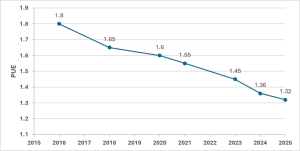
Figure 3: PUE (avg) trends in Data Centers for last 10 years, (2016-2025)
Workforce Development for Sustainable Data Centers
As the sector expands, skilled professionals are essential for designing, operating, and managing data centers. CII-IGBC offers the Data Center Accredited Professional (DCAP) programme, builds industry capacity in sustainable design, energy efficiency, and operational best practices, supporting India’s transition to low-carbon and future-ready data center infrastructure.
Way Forward
Sustaining India’s data center growth requires action across five interconnected pillars:
- Energy reliability: Accelerate the shift to renewable energy through green open access, PPAs and diverse clean energy sources to ensure a reliable low carbon power.
- Connectivity diversification: Developing additional submarine cable landing stations and strengthening inland fibre networks to support growth in Tier 2 and Tier 3 cities.
- Outreach of Green Data Centers: promote sustainable practices through technical workshops, conferences, knowledge forums, and stakeholder interactions. To promote green data center, IGBC frequently conduct Data Center Summits.
- Workforce development: Build a skilled talent pipeline through data center-focused education, programmes and national skilling initiatives such as IGBC’s DCAP, Skill India and Digital Infrastructure for the Next Generation.
- Regulatory harmonization: Establish Data Center Economic Zones, Incentivization Scheme, and single window approvals supported by a national policy framework for balanced growth.

Figure 4: Launch of Guidebook for Green Data Center Accreditation Program
Data center represent as one of the India’s fastest growing CRE asset classes, and a critical component of the digital infrastructure. Addressing power reliability, regulatory harmonization, and workforce readiness will be essential to sustain growth and position India as a global data centre hub.