
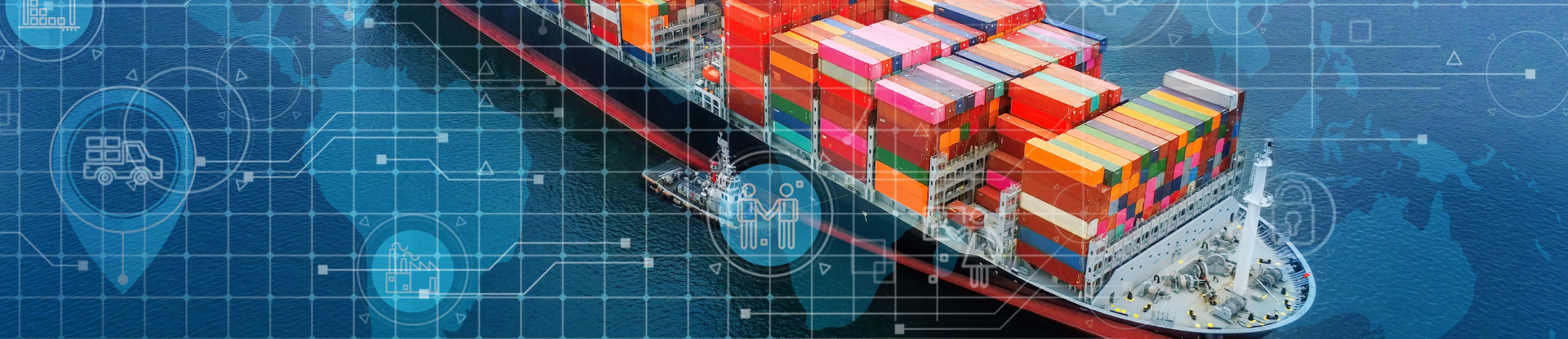
India is blessed with a commanding peninsular geography, giving it one of the world’s longest coastlines, stretching approximately 7,500 kilometres, bordered by the Arabian Sea to the west, Bay of Bengal to the east, and a vast expanse of the Indian Ocean to the south. Combined with an annual precipitation of 4,000 billion cubic meters, and a landscape shaped by numerous mountains and rivers, including some of the mightiest in the world, India is well positioned to harness these water resources and build a robust blue economy that can serve as a leading model of sustainable growth and maritime opportunity.
India’s Commercial Lifeline
Nearly 95% of the country’s trade by volume and around 70% by value still traverses the nation’s maritime routes, highlighting the sea as the lifeblood of India’s commerce. This blue economy holds the potential to emerge as a major driver of the country’s future growth, contributing to energy security, food needs, and strategic strength.
In recent years, systematic efforts to harness the economic and scientific potential of oceans have gained momentum, reflecting it as a national priority. Yet for a country like India, where 60% of our landmass equivalent lies in the ocean, its contribution to value creation has remained limited so far. And the goals of achieving a developed India by 2047 requires us to look beyond land-based resources and tap into the potential of our water resources.
The Deep Ocean Mission
The Deep Ocean Mission is an INR 40.77 billion initiative led by the Ministry of Earth Sciences to drive the blue economy, with an aim to develop technologies for exploring and sustainably utilizing the deep ocean’s living and non-living wealth. It spans all marine-based industries, from fishing and shipping to biotechnology and tourism, hoping to also provide solution to global challenges such as climate change.
Its focus areas include development of technology for deep-sea mining, with India working to create an integrated mining system to extract polymetallic nodules from the deep sea, as well as support future commercial mineral exploration once the global rules are set by the International Seabed Authority. The mission also spans ocean climate advisory services, deep-sea biodiversity conservation, and ocean survey and exploration
Under this mission, India has also launched Samudrayaan, its first manned deep-sea submersible project. Matsya 6000 can carry three people to a depth of 6,000 meters, marking India among a handful of nations with this capability.
India’s Deep Ocean Mission marks a transformative leap in India’s scientific and strategic capabilities. By venturing into the depths of the ocean, India is not only unlocking vast reserves of minerals, biodiversity, and energy, but positioning itself as one of the few nations with advanced deep-sea exploration technology. This not only supports the blue economy, but fosters indigenous technology, boosts marine-based industries, and creates new opportunities for research, enterprise, and employment.
Maritime India Vision 2030
India’s Maritime India Vision 2030 (MIV 2030) is a transformative roadmap launched in 2021, aligned with the vision of Ocean Decade (UN Decade of Ocean Science for Sustainable Development 2021-2030), to stimulate ocean sciences and knowledge generation to catalyze new opportunities for sustainable development of marine ecosystems.
MIV 2030 rests on ten pillars, from port infrastructure and shipbuilding capacity to green shipping, seafarer education, and inland waterways, positioning India as a global maritime powerhouse. It is a catalyst for trade, investment, and employment, charting India’s course towards economic growth and global competitiveness.
Financing the Maritime Future
Backing this vision is a financing push of over INR 700 billion across the maritime sector. This includes the INR 250 billion Maritime Development Fund for long-term shipping and shipbuilding growth, the INR 247.36 billion Shipbuilding Financial Assistance Scheme to tackle domestic cost disadvantages, and the INR 199.89 billion Shipbuilding Development Scheme supporting greenfield yard expansion. Alongside these, the INR 3.05 billion Indian Ship Technology Centre will serve as a national hub for ship design and R&D, while INR 10 billion has been earmarked for inland waterway infrastructure across Northeast India.
Taken together, this financing architecture signals a shift from ad-hoc support to a structured, long-term capital pipeline for the maritime sector.
Building the Workforce
In just a few years, India’s seafarer workforce has soared by 125K, 300K accounting for 12% of global seafarer workforce, making it the world’s top three suppliers of trained seafarers. This opens a vast opportunity for India’s talent to contribute to the global maritime industry, access high quality employment opportunities and strengthen India’s position as a leader in the sector.
Looking ahead, as India scales its blue economy’s GDP contribution from 4% to a projected 10% by 2047, this growth will demand a much larger, better-trained workforce across fisheries, navigation, ship operation, logistics, and allied maritime industries at home and overseas. With estimates suggesting the sector could add up to INR 100 billion to GDP by 2030, workforce development is fast becoming an economic necessity, not just a social strategy.
Fisheries and the Deep Sea
India has already emerged as one of the world’s largest fisheries economies. Today, it is the second-largest fish producer globally, producing about 8% of global fish production and supporting 30 million livelihoods. However, much of India’s fishing activity remains concentrated in nearshore waters. Coastal fisheries face challenges from overfishing, habitat degradation, and climate-induced changes in maritime marine ecosystem, while vast deep-sea resources located beyond the continental shelf remain significantly underutilized.
Studies have shown that India’s maritime ecosystem has the potential to sustainably produce 7.16 million tonnes of fish annually with modern technology and scientific management practices, if adopted. Recognizing this, NITI Aayog has developed a long-term roadmap for transforming India’s deep-sea fisheries between 2025 and beyond 2033 to emerge as a global leader in sustainable deep-sea fisheries through advanced technologies, ecosystem-based management, and internationally competitive seafood exports.
Global Leadership
India’s blue economy ambitions extend beyond its national boundaries. During its G20 presidency, India played a pivotal role in securing consensus of the G20 Chennai High-Level Principles for a Sustainable and Resilient Blue Economy, which emphasize ocean health, sustainable livelihoods, marine ecosystem conservation, financing, innovation, and international cooperation, reflecting India’s growing leadership in shaping global maritime governance.
The Road Ahead
Despite remarkable progress, India’s blue economy continues to navigate evolving environmental challenges, including coastal erosion, habitat degradation, sea level rise, and cyclones. Addressing these will require innovative financial mechanisms, blended finance, private sector participation that will help transition towards deep sea fisheries, modern fishing vessels, navigation technologies, cold chain infrastructure, fish landing structures, and logistic networks. As traditional fishing communities possess generations of ecological knowledge, they should be taken into consideration while building the technologies of the future. This means strengthening fishing cooperatives, expanding access to insurance, improving digital market access, enhancing skill development, and promoting community participation in decision-making so that the benefits of the blue economy are shared equitably.
As India charts its path towards becoming a developed nation, the ocean will play an increasingly important role. Guided by science, powered by technology, and anchored in sustainability, the blue economy presents a significant opportunity to drive economic growth while ensuring the responsible stewardship of one of our most valuable shared resources.
Latest Post
Considerable benefits using 1win for mobile gaming and casino experiences
Considerable benefits using 1win for mobile gaming and casino experiences...
Read MorePolitical events forecasting with kalshi offers unique insights into future outcomes
Political events forecasting with kalshi offers unique insights into future...
Read More