

India’s agri-food systems are undergoing a profound transformation. Driven by technological innovation, evolving consumer preferences, climate imperatives, and increasing market integration, agriculture today is no longer limited to cultivation alone. It encompasses a dynamic ecosystem of production, processing, value addition, logistics, and market linkages.
At the heart of this transformation are women.
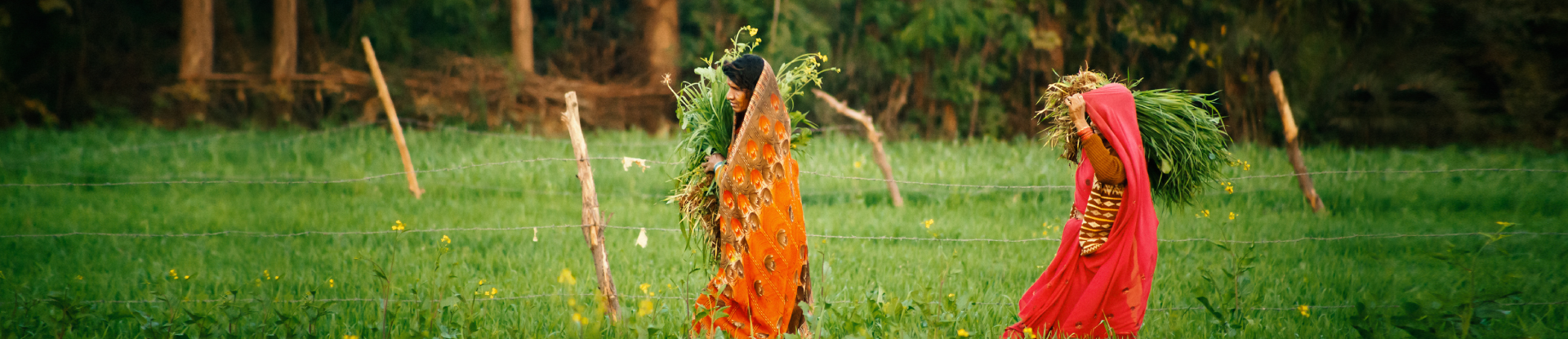
Across rural India, women have always played a central role in agriculture and allied activities. They sow and harvest crops, manage livestock, preserve seeds, process food products, and increasingly participate in entrepreneurship and local enterprise development. Their labour, knowledge, and resilience form the backbone of India’s food systems.
Yet despite their indispensable contributions, women remain among the most under-recognised stakeholders in the agricultural economy.
The Invisible Pillars of Agriculture
Women contribute significantly to agricultural operations, but their roles often remain informal and underpaid. Many lack ownership of land, have limited access to institutional finance, receive less exposure to modern technologies, and are underrepresented in producer organisations, corporate value chains, and policy-making platforms.
This disconnects between contribution and recognition has far-reaching implications.
When women are excluded from decision-making and leadership, agriculture loses out on innovation, productivity gains, and opportunities for more equitable growth. Conversely, when women are empowered as leaders, entrepreneurs, and changemakers, entire communities benefit through improved household incomes, better nutrition outcomes, and
The declaration of 2026 as the International Year of Women Farmers marks a pivotal moment to reframe the role of women in agriculture.
This global recognition is not just a celebration of women’s contributions—it is a call to action.
It is an opportunity to move beyond viewing women as participants in agriculture and to recognise them as strategic leaders shaping the future of India’s agri-food systems.
The conversation must now focus on how to create an enabling ecosystem where women can access productive assets, finance, technology, markets, and leadership opportunities.
Why Women’s Leadership Matters
Empowering women in agriculture is one of the most effective pathways to building resilient and inclusive food systems.
Women-led enterprises and producer organisations have demonstrated strong potential in:
- Enhancing productivity and crop diversification
- Promoting value addition and local processing
- Strengthening nutrition-sensitive agriculture
- Driving sustainable farming practices
- Creating employment opportunities in rural communities
- Improving household and community resilience
When women move from participation to leadership, agriculture becomes more innovative, inclusive, and future-ready.
Recognising the need to elevate women’s voices and leadership, the CII Food and Agriculture Centre of Excellence, under its Task Force on Women in Agriculture, is launching a dedicated knowledge initiative titled:
“Women in Food Systems: From Participation to Powering India’s Agri-Future”
The national initiative that will unfold through:
- A series of curated webinars
- Thematic video blogs and success stories
- Knowledge products and best practice documentation
- Stakeholder consultations
- A flagship national conference on women in agriculture
Together, these efforts aim to build visibility, foster dialogue, and catalyse collective action toward gender-inclusive food systems in India.
Building a resilient agri-food future requires acknowledging and investing in women’s leadership.
As India prepares for its centenary journey toward 2047, empowering women in agriculture is not merely a matter of inclusion—it is a strategic imperative for economic growth, food security, and sustainable development.
We invite all stakeholders—industry leaders, farmer organisations, policymakers, researchers, and development partners—to join us for this important conversation.
Note: This article has been authored by Dr Usha Barwale Zehr, Lead- CII Task Force on Women in Agriculture and Executive Director, Grow Indigo
Latest Post
Conforto e elegância definem a sua casa com latavola.pt, móveis para todos os estilos
Conforto e elegância definem a sua casa com latavola.pt, móveis...
Read MoreΑνάπτυξη δεξιοτήτων και δημιουργική μάθηση με το https://curiousmindsireland.com για κάθε ηλικία
Ανάπτυξη δεξιοτήτων και δημιουργική μάθηση με το https://curiousmindsireland.com για κάθε...
Read MoreΑπόλαυση παιχνιδιού και κέρδη με το Spinrollz casino, μια νέα εμπειρία για παίκτες
Απόλαυση παιχνιδιού και κέρδη με το Spinrollz casino, μια νέα...
Read MorePlatforma dla graczy z szybkim dostępem do felixspin login i szeroką ofertą rozrywki
Platforma dla graczy z szybkim dostępem do felixspin login i...
Read MoreUitdagingen overwinnen met betory nederland en jouw sportweddenschappen
Uitdagingen overwinnen met betory nederland en jouw sportweddenschappen Het Belang...
Read More