
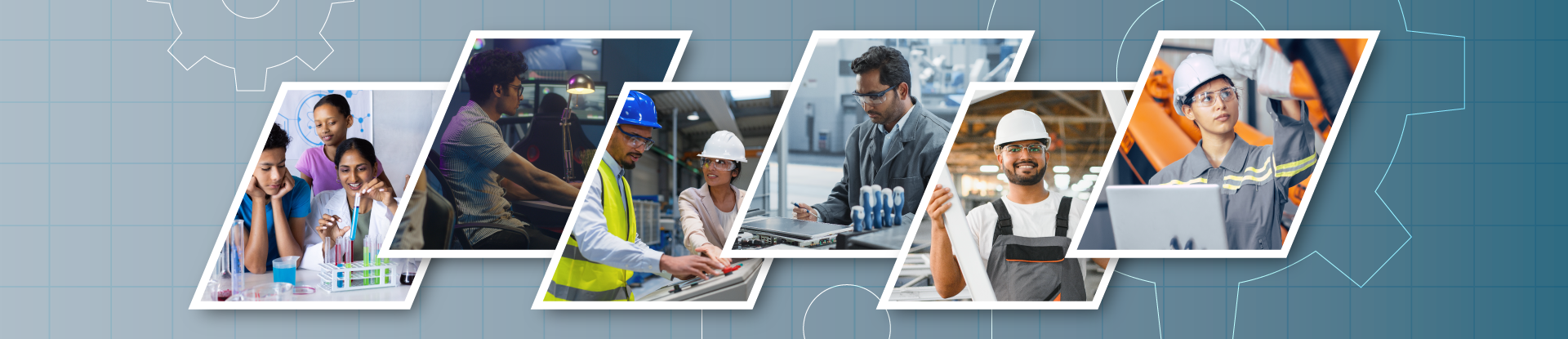
The world navigates an era defined by artificial intelligence, digital transformation, sustainability, and new models of work and the nature of employability is undergoing a profound shift. Tomorrow’s workforce will not be defined by qualifications alone. It will be defined by how agile, adaptable, and digitally fluent people are, and by their commitment towards learning.
For India, this is a defining moment. Home to one of the world’s youngest populations, with 65 per cent aged below 35, the country is poised to transform its demographic dividend into a long-term skills dividend.
As India observes World Youth Skills Day, the focus must shift from skilling for jobs to skilling for competitiveness. The quality of India’s workforce will play an increasingly critical role in determining the country’s productivity, global competitiveness and its journey towards Viksit Bharat by 2047.
As the global economy undergoes a significant transformation, supply chains are diversifying, advanced manufacturing is expanding, artificial intelligence (AI) is reshaping workplaces, and Global Capability Centres (GCCs) are evolving from support functions into hubs of innovation and product development. To capitalize on these opportunities, India is building a future-ready workforce through targeted skilling and upskilling initiatives.
Government Initiatives to Boost Employability
Jobs are central to India’s growth, competitiveness, and its vision of becoming a Viksit Bharat. This transformation is being driven by technological advancements, evolving industry demands, and a rapidly expanding skilling ecosystem that is preparing the workforce for the jobs of the future.
Recognising this, the Government has also expanded its skilling ecosystem over the past decade. According to the Ministry of Skill Development and Entrepreneurship (MSDE), India today has 13.9k Industrial Training Institutes (ITIs), over 5.6 million apprentices engaged since 2016, 16.4 million youth trained under the Pradhan Mantri Kaushal Vikas Yojana (PMKVY) and more than 15 million registrations on the Skill India Digital Hub. Thirty Skill India International Centres have also been announced to prepare Indian talent for global opportunities.
The country’s network of Industrial Training Institutes (ITIs) plays a key role in skilling youth. The focus now is on upgrading the institutes with better infrastructure, qualified trainers, and resources aligned to industry requirements. This will help improve the job placement rate for ITI graduates, which currently stands below 50 per cent.
To address this, the Supporting Pradhan Mantri Skilling and Employability Transformation Through Upgraded ITIs (PM-SETU) Program, aims to upgrade the ITI network and better align training with labour market needs. It targets producing over one million better-skilled workers annually and bringing more young graduates into the workforce.
Building a Future-Ready Workforce through Technology and Digital Infrastructure
Digital infrastructure is also pushing the change forward. The Skill India Digital Hub (SIDH) brings together learners, employers, training providers, and assessment bodies on one platform. It already has 15 million+ candidates, 7k+ training providers, and thousands of employers. SIDH is making skilling more accessible to people across India.
Technology is the second key force driving this shift. As AI, automation, cloud computing, cybersecurity, and advanced manufacturing redefine industries, the need for future-oriented skills is accelerating. India is already home to 16 per cent of global AI talent, with the AI workforce set to reach 1.25 million by 2027. Across sectors, such as technology, manufacturing, BFSI, healthcare, and renewable energy, the focus is increasingly on building digital and analytical capabilities.
Apprenticeships and Continuous Skilling for the Future of Work
Another key pillar is work-based learning. Apprenticeships have emerged as a powerful pathway to improve employability and align talent with industry demand. The National Apprenticeship Promotion Scheme (NAPS) in 2025 has engaged more than 1.184 million apprentices. In FY 2025–26 alone, around 1,235k apprentices were engaged. This highlights the growing push by industry and government to scale the “earn while you learn” approach and create a stronger bridge from education to employment.
Today, employers are now looking for a blend: digital skills plus problem-solving, communication, adaptability, and a mindset for lifelong learning. The workforce of the future will not rely on a single skill for a single career. Instead, it will need to continuously reskill throughout its working life.
For India, the message is clear. Our greatest competitive advantage will not be low costs or abundant labour—it will be highly skilled human capital.
Latest Post
Linfluence grandissante des plateformes digitales comme betify sur lavenir des paris sportifs
Linfluence grandissante des plateformes digitales comme betify sur lavenir des...
Read MoreEssential factors impacting outcomes from pacific spin require careful consideration
Essential factors impacting outcomes from pacific spin require careful consideration...
Read MoreIntrépide parcours à travers chicken road 2, esquivez les véhicules et accumulez des bonus sans attendre
Intrépide parcours à travers chicken road 2, esquivez les véhicules...
Read MoreGemütliche Übernachtungen und https://zur-suelzburg.de für entspannte Familienmomente
Gemütliche Übernachtungen und https://zur-suelzburg.de für entspannte Familienmomente Die vielfältigen Unterkunftsmöglichkeiten...
Read MoreDetailed insights and susuakibolg.com empower effective resource management today
Detailed insights and susuakibolg.com empower effective resource management today Understanding...
Read More